Proper Running Form for Beginners (Keep It Simple)
Search “proper running form” and you will fall into a rabbit hole. Foot strike debates. Cadence targets. Videos telling you your hips are wrong. It is enough to make you feel like you need a coaching certification just to jog around the block.
Here is my honest take after coaching a lot of beginners. You already know how to run. You did it as a kid without a single thought about your form. Most of what your body does naturally is fine, and the fastest way to hurt yourself is to try to rebuild your entire stride in week two.
That said, there are a handful of small adjustments to your running form that genuinely help. Here they are.
Run tall
The most common thing I see is a runner folded slightly forward at the waist, especially late in a run when they get tired. That closes off your breathing and puts your hips in a bad spot to do their job.
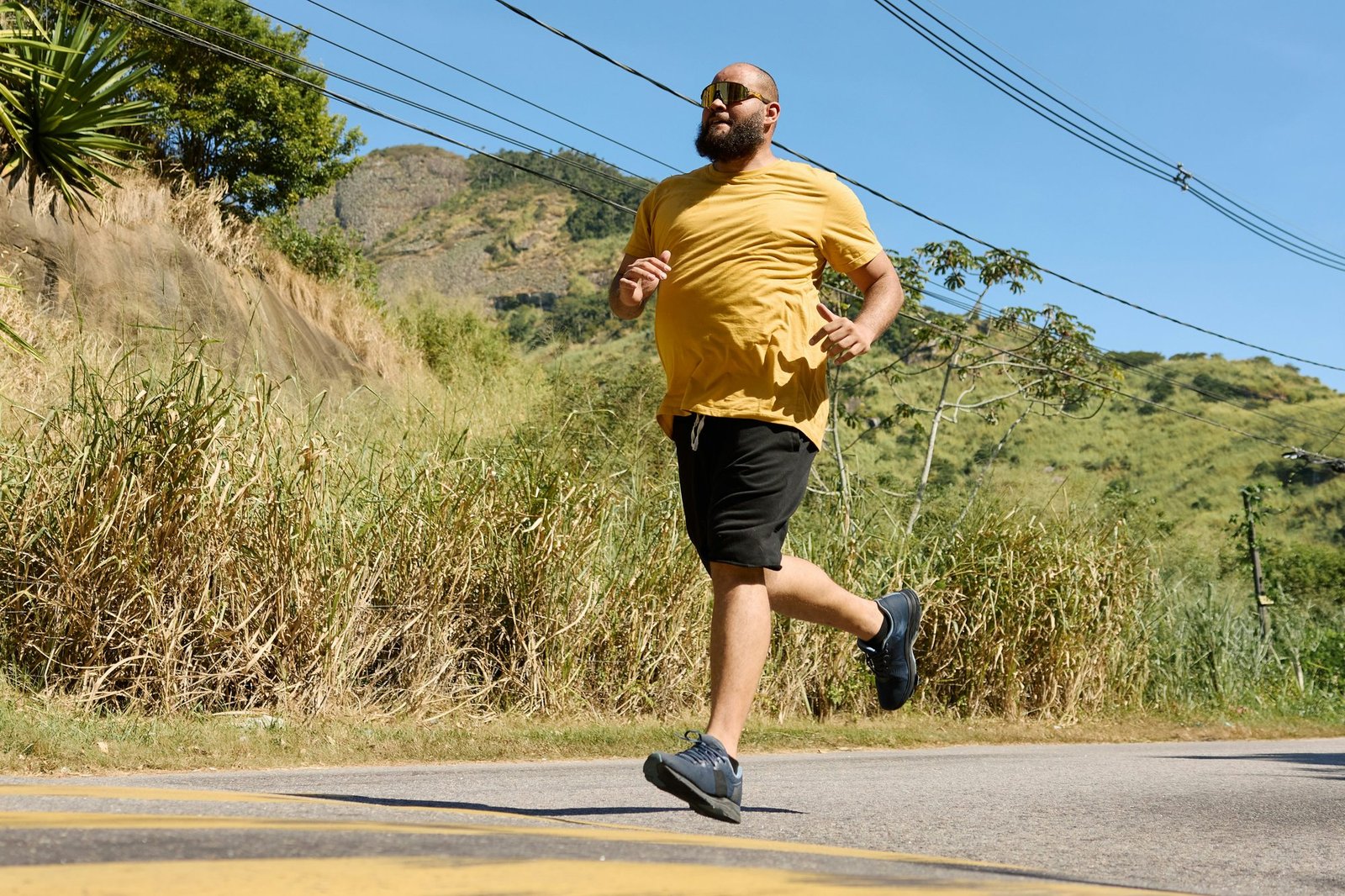
Think about running tall through your chest. Crown of your head reaching up. If you want a lean, and a slight one is fine, it should come from your ankles, so your whole body tilts forward like a ski jumper, not like you are bowing.
A quick reset that works: every so often, take a deep breath and let your shoulders drop. That one motion usually fixes posture, shoulder tension, and breathing all at once.

Relax your hands and shoulders
Watch a tired runner and you will see the shoulders creep up toward the ears and the fists clench. All that tension costs energy and gives you nothing.
Keep your hands loose, like you are holding a potato chip you do not want to break. Arms bent around ninety degrees, swinging forward and back rather than crossing your chest. If your arms are swinging across your body, your torso is twisting with every step, and that is wasted motion.
Take shorter, quicker steps
If you only change one thing, make it this one.
New runners tend to reach out in front with a long, straight leg. That is called overstriding, and it acts like a small brake on every single step. It also sends impact straight up through the knee. It is closely related to the most common mistake new runners make.
The fix is not to think about where your foot lands. It is to think about taking slightly shorter, quicker steps. When you shorten the step, your foot naturally lands closer to underneath you, and the braking mostly disappears. You do not need to count anything. Just imagine the ground is a little hot and you do not want to leave your foot there long.
Look ahead, not down
Most people run staring at the ground a few feet in front of them, which pulls the head down and the posture with it. Pick a spot maybe twenty or thirty feet ahead and let your eyes rest there. Glance down when the footing calls for it, then look back up.
What you can ignore
Heel striking. You will read that landing on your heel is wrong. Plenty of healthy, lifelong runners land heel-first. Foot strike is mostly a symptom, not the disease. If you fix overstriding, your landing tends to sort itself out. Do not try to force a forefoot landing. That is a fast route to sore calves and an unhappy Achilles.
Hitting an exact cadence number. You will see 180 steps per minute quoted as the magic figure. It came from watching elite runners at race pace, and it is not a rule for a beginner jogging at a conversational effort. Shorter and quicker is the useful idea. The specific number is not.
Everything at once. If you try to fix posture, arms, cadence, and gaze on the same run, you will run stiff and tense and miserable, which is worse than any form flaw you started with.
How to actually work on it
Pick one cue. Just one. Use it for a week.
Better yet, use it for thirty seconds at a time. Somewhere in the middle of a run, run tall for half a minute, then let it go and run normally. Do that a few times. Small doses teach your body far better than white-knuckling a new stride for three straight miles.
Good form is not a position you hold. It is a habit that shows up on its own once you have run enough. Your job right now is to keep showing up, keep the effort easy, and let the miles do most of the teaching.
Want a plan that builds those miles the right way, gradually, with walk breaks built in from day one? My free 12-week Couch to 5K plan does exactly that. Download it free here.