Why the Right Running Shoe Matters (and How to Pick One)
Running is the cheapest sport there is. No gym membership, no equipment, no court to reserve. You walk out your front door and go. But there is one piece of gear worth getting right, and it is the one most new runners get wrong.
Your shoes.
I am not going to tell you that you need a two hundred dollar pair. You do not. What you need is a pair of running shoes that fits your foot and is actually built for running, and that is a lower bar than the shoe industry wants you to believe.
Why the right running shoes matter more than you think
When you run, you land with something like two to three times your body weight on one foot, over and over, thousands of times per mile. That force has to go somewhere. A shoe that fits well spreads it out. A shoe that does not fit sends it into places that were not built to take it, and that is where a lot of beginner aches start.
Most of the early complaints I hear from new runners trace back to shoes. Shin pain. A hot spot on the arch. Numb toes at mile two. Black toenails. Knees that ache the day after. None of that is a sign you are not built for running. A lot of the time it is a sign you are running in the wrong shoes, or in shoes that quit working two hundred miles ago.
Go to a real running store, at least once
This is the single best piece of advice I can give a new runner, so I will keep it short. Find a specialty running store and let them watch you walk or jog. They will look at how your foot moves, hand you three or four options, and let you run in them on a treadmill or up the sidewalk.
It is free. You are not obligated to buy the most expensive pair on the wall. And even if you end up ordering online forever after, you will walk out knowing your size and what category of shoe suits you, which is information you cannot get from a review site.
The big thing they are sorting out is whether you do better in a neutral shoe or a stability shoe. Some runners’ ankles roll inward more than others when the foot lands, and a stability shoe is built with extra support on the inside to help manage that. Plenty of people run happily in neutral shoes their whole lives, and plenty of people need stability and feel an immediate difference once they are in the right one. There is no better or worse category here. There is only which one matches your feet, and that is exactly the question a good running store can answer in about ten minutes of watching you move.
If there is no running store near you, that is not a dealbreaker. Just be willing to order two sizes and send one back.
What actually matters
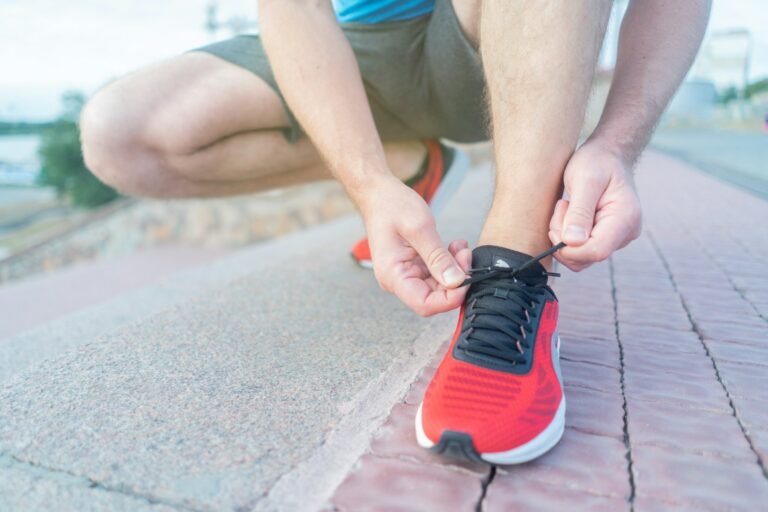
Fit, first and last. You want about a thumb’s width between your longest toe and the end of the shoe. That usually means going a half size to a full size up from your street shoe. Your feet swell when you run, especially in the summer, and a shoe that feels perfect in the store at 10 AM can feel tight at mile three. Shop in the afternoon when your feet are already a little swollen.
Width. People obsess over length and ignore width. If the sides of your feet feel squeezed, ask for a wide. Most major brands make them and nobody thinks twice about it.
Comfort right out of the box. Modern running shoes do not need breaking in. If it does not feel good on your foot in the store, it is not going to get better after a hundred miles. Trust that first impression.
How they feel running, not standing. A shoe can feel like a pillow when you stand still and feel completely different once you are moving. Jog in them before you decide.
What matters less than the marketing says
Carbon plates, stack heights, the exact millimeter of drop, whatever the shoe of the year is. That stuff is real, but it is optimization for people who are already running well and want to run faster. You are building a base. A well-fitting daily trainer from a major brand, in whichever category suits your feet, will serve you fine for your entire Couch to 5K program and a good while after.
Last year’s model is usually the same shoe with different paint at forty percent off. Buy it without guilt.
When to replace them
The usual guidance is 300 to 500 miles, which is a wide range because it depends on your weight, your stride, and the surfaces you run on. On three runs a week, most beginners get somewhere around six to nine months out of a pair.
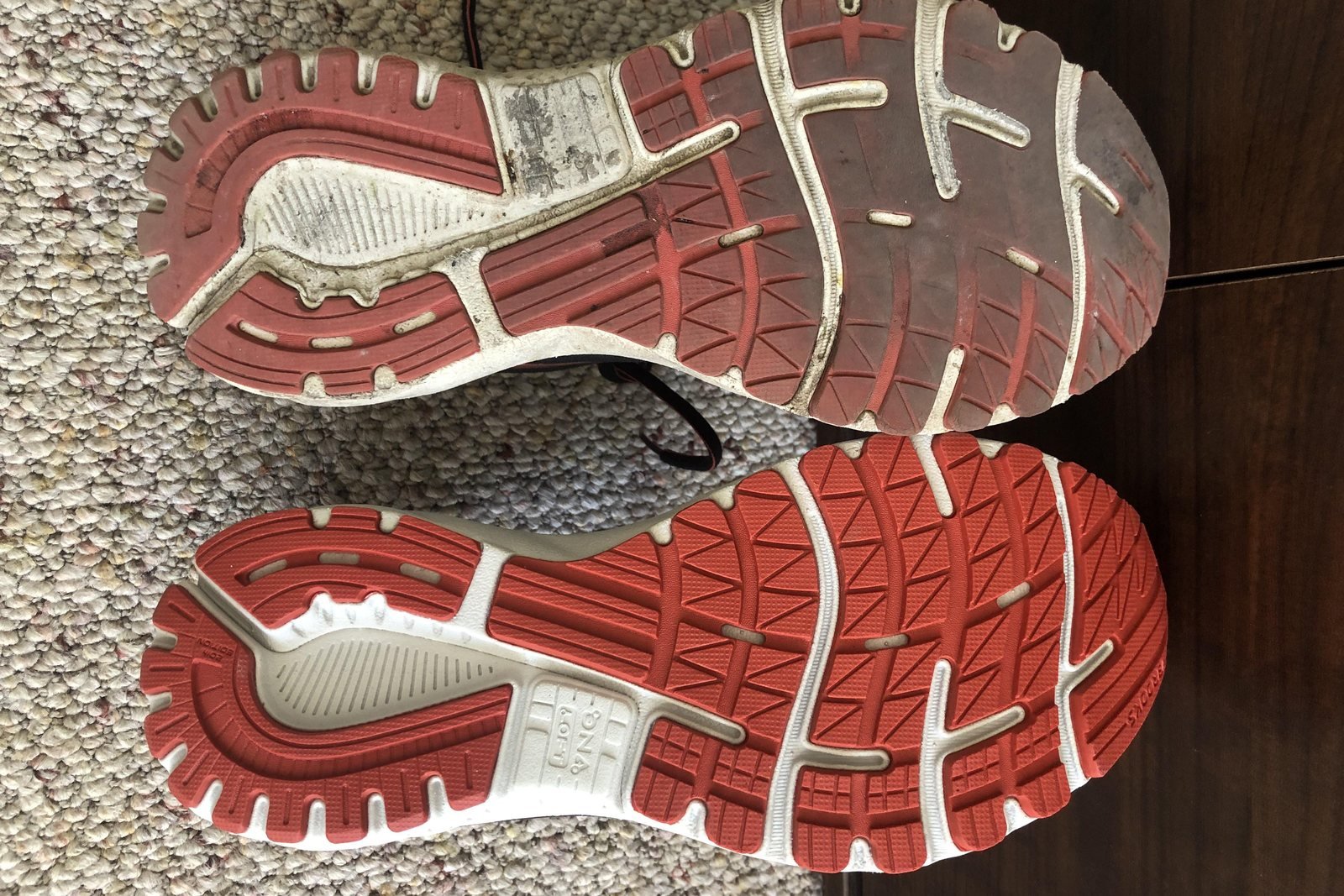
The better signal is how you feel, plus what you can see. Flip them over. When the tread has worn smooth in the spots you land hardest, when the midsole looks creased and compressed, when the shoe stops feeling springy, or when little aches start showing up that were not there a month ago, it is probably time. Set them next to a fresh pair sometime and the difference is obvious. If you write down the date you bought them, you will not have to guess.
One more thing
Do not run your whole program in the shoes you already own for the gym or for work. Cross-trainers and casual sneakers are built for side-to-side movement and standing, not for repeated forward impact. That is a common one, and it is an easy fix.
Get the shoes sorted early. It removes one of the most common reasons new runners quit before they ever get going. And once you are moving, remember that walk breaks are a training tool, not a failure.
If you are ready to start and you want a plan that takes you from your first walk-run all the way to a 5K finish line, my free 12-week Couch to 5K plan is built exactly for that. No cost, no experience needed. Grab it here.